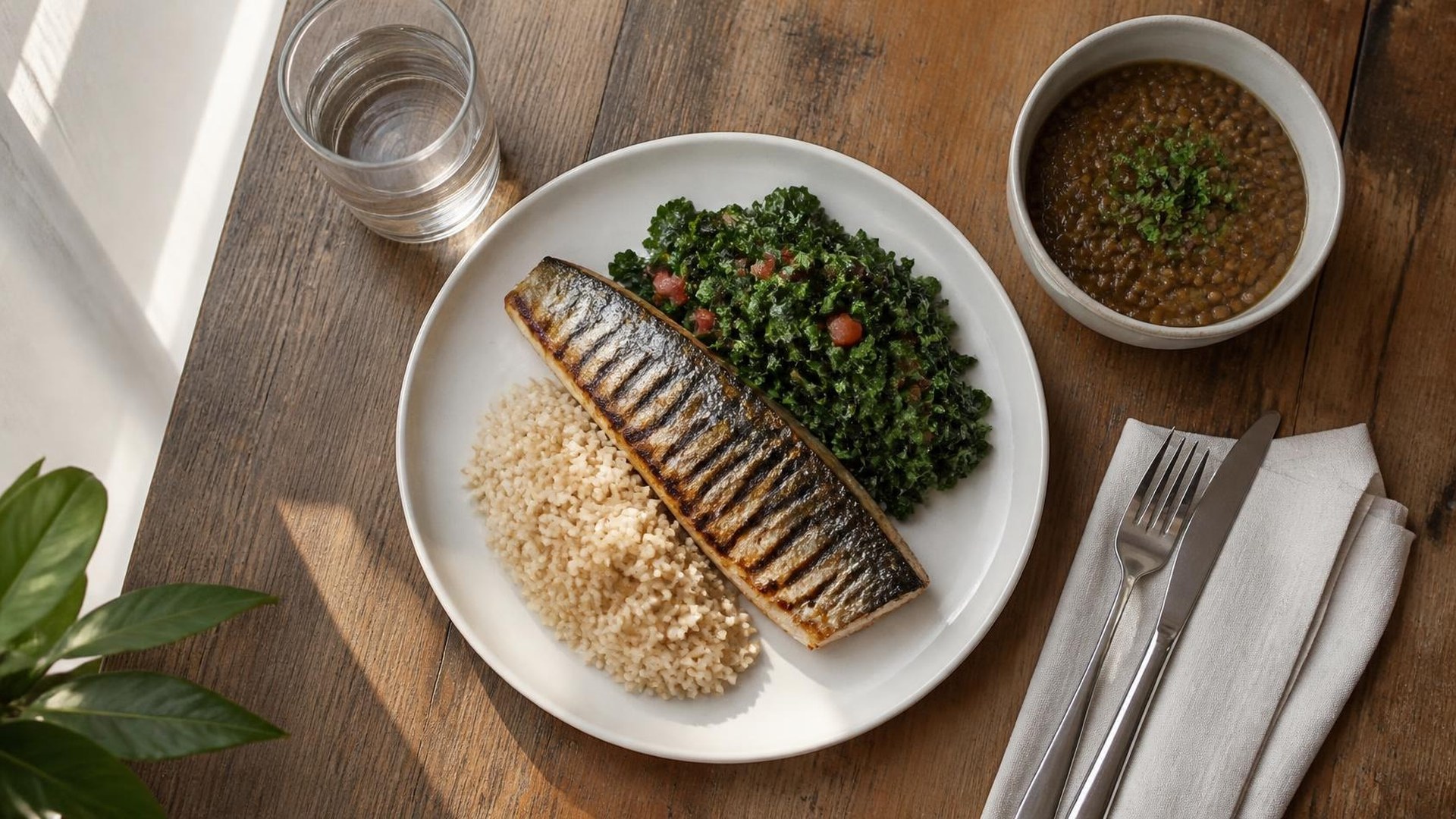
Protein advice has gotten louder in 2026. Grocery shelves are packed with protein-boosted snacks, social media pushes daily targets that look more like bodybuilding plans, and the newest U.S. Dietary Guidelines talk about higher protein ranges than the long-standing Recommended Dietary Allowance. That leaves a practical question: how much protein do healthy adults actually need, and what do official sources say?
This guide sticks to numbers and framing from the National Academy of Medicine (via Harvard T.H. Chan School of Public Health), Stanford Medicine nutrition experts commenting on the 2025–2030 Dietary Guidelines shift, and Harvard's protein package research. It is general nutrition information, not medical advice. People with kidney or liver disease, or anyone on a clinician-directed diet, should follow their own care plan.
The official RDA is still 0.8 g per kilogram
Harvard's Nutrition Source states that the National Academy of Medicine recommends adults get a minimum of 0.8 grams of protein for every kilogram of body weight per day, or just over 7 grams for every 20 pounds of body weight. That is the Recommended Dietary Allowance (RDA), designed to meet the needs of nearly all healthy adults.
Body weight | Approx. RDA protein |
|---|---|
140 lb (about 63.5 kg) | about 50 g per day |
150 lb (about 68 kg) | about 55 g per day |
200 lb (about 91 kg) | about 70 g per day |
The Academy also sets a wide Acceptable Macronutrient Distribution Range: protein can make up anywhere from 10% to 35% of daily calories. That range is about diet composition, not a single ideal target.
Stanford Medicine's Christopher Gardner notes an important nuance often missed in marketing: the Estimated Average Requirement used in the underlying studies was about 0.66 g/kg. The RDA was set about 20% higher so it would cover roughly 98% of adults. In that framing, 0.8 g/kg is not a floor you must "beat" every day; it is already a protective population target.
What changed in the newest Dietary Guidelines talk
Until recently, public conversation centered on that 0.8 g/kg figure. Stanford Medicine reporting in March 2026 describes the newly revised Dietary Guidelines as recommending a higher practical range of about 1.2 to 1.6 g/kg. For a 150-pound adult, that jumps the conversation from around 55 grams a day to roughly 80 to 110 grams.
Gardner's reaction, as quoted by Stanford Medicine, is blunt: there was not a clear new body of evidence showing the old RDA was off by 50% to 100%. He links much of the noise to heavy marketing. Dietitian Marily Oppezzo's view is more nuanced for two groups where higher intake is often discussed: adults over 40 and people losing weight, including those on weight-loss medications. For those groups, she says evidence can support eating more than 0.8 g/kg to help limit muscle loss, while stressing that resistance training matters far more than protein alone.
For people with a body mass index over 30, Oppezzo advises using an adjusted body weight for the calculation rather than scale weight, because excess body mass is not the same as lean mass that needs to be fed and maintained.
Most Americans already eat plenty of protein
Stanford Medicine cites National Health and Nutrition Examination Survey figures showing adult men in the U.S. typically eat around 90 to 100 grams of protein a day and women about 65 to 75 grams. Those averages already sit near or inside the newer higher ranges for many people.
Harvard makes a related point: protein deficiency is uncommon among healthy adults in the United States and most other high-income countries because protein is available in many plant and animal foods. Globally, the picture is different; food insecurity still leaves millions of people, especially children, without enough protein.
Fiber is the clearer national shortfall. Stanford Medicine notes that only about 5% of Americans meet the RDA for fiber, which matters for gut health and chronic-disease risk. Filling up on steaks and shakes while crowding out beans, whole grains, fruits and vegetables can solve a protein problem that many people do not have, while worsening a fiber problem that they do.
Why the protein "package" matters more than a gram count
Harvard emphasizes that when you eat protein, you also eat the fat, sodium, fiber and other nutrients that come with it. That package is what links most strongly to long-term health outcomes in cohort research.
A 4-ounce broiled sirloin steak delivers about 33 grams of protein and about 5 grams of saturated fat.
A 4-ounce ham steak can provide about 22 grams of protein with less saturated fat but around 1,500 milligrams of sodium.
Four ounces of grilled sockeye salmon offer about 30 grams of protein, low sodium, a little more than 1 gram of saturated fat, and omega-3 fats.
A cup of cooked lentils provides about 18 grams of protein and about 15 grams of fiber, with virtually no saturated fat or sodium.
Harvard's takeaway from long-running cohort work is consistent: swapping red and processed meat for fish, poultry, beans, nuts or soy is associated with better cardiovascular and mortality patterns more than simply raising total protein. The World Health Organization's IARC has classified processed meat as carcinogenic to humans and red meat as probably carcinogenic, with the strongest evidence around colorectal cancer. Those classifications are about cancer risk from meat patterns, not a claim that protein itself is harmful.
Plant protein myths that still confuse people
Gardner argues that the old "incomplete plant protein" story is overstated for real-world diets. Plant foods are not missing essential amino acids in the absolute sense, even if the amino acid mix differs from meat. When people eat varied plant foods across a day, and especially when total protein is already above the bare minimum, combining beans and rice at the same meal is not a strict requirement. A 2019 paper from Gardner's group compared amino acid distributions across animal and plant foods and found them much closer than popular advice suggests.
Oppezzo also pushes back on two gym myths: that you cannot absorb more than a fixed number of grams per meal, and that you must drink a shake in a narrow post-workout window. For most adults, total daily intake and training matter more than perfect meal timing. The post-exercise window for muscle repair stretches across about a day, not a few minutes in the locker room. Older adults may benefit from spreading protein across meals because each meal may need a higher dose to stimulate muscle protein synthesis.
Protein powders: useful tool, not a regulated meal
Harvard notes that protein powders can come from eggs, milk proteins such as whey or casein, or plants such as soy, pea or hemp. Like other dietary supplements in the U.S., they are not regulated by the FDA the way medicines are. Labels can hide added sugars, sweeteners, thickeners and flavorings. If you use a powder, read the ingredient list and treat it as a convenience food, not a medical product.
A practical way to set your number
Start with body weight in kilograms times 0.8 for the classic RDA. That is your deficiency-prevention baseline.
If you lift weights, are over 40, or are in a calorie deficit, talk with a clinician or registered dietitian about whether a higher target in the 1.2–1.6 g/kg conversation range makes sense for you.
Count food first. Eggs, yogurt, dal, paneer, chicken, fish, tofu, beans, peanuts and milk already add up quickly for most people who eat mixed meals.
Judge the package. Prefer fish, poultry, legumes, nuts and seeds more often than processed meats.
Protect fiber. If raising protein crowds out vegetables, fruit, whole grains and legumes, the trade is usually a net loss.
The bottom line
For healthy adults, the evidence-based floor remains about 0.8 grams of protein per kilogram of body weight per day. Newer guideline language and social media may push 1.2 to 1.6 g/kg, but Stanford Medicine experts say average U.S. intakes are already high for many people and that marketing has outrun the science for the general population. Higher targets are most often discussed for aging adults and people losing weight, and even then strength training does more for muscle than an extra scoop of powder. Choose protein foods for what else they bring to the plate, keep fiber in the picture, and treat gram goals as a planning tool rather than a contest.